Raised Bed Kits
Look for untreated cedar or galvanized metal, 10–12 in deep, and no wider than 4 ft so you can reach the middle.
You don't need much to start. These are the practical categories worth knowing about — and what to look for in each.
Disclosure: Some links on this page may become affiliate links once the site owner activates approved affiliate partnerships. If so, the site may earn a commission at no extra cost to you. No affiliate links are active right now. Read the full disclosure.
Look for untreated cedar or galvanized metal, 10–12 in deep, and no wider than 4 ft so you can reach the middle.
A simple probe takes the guesswork out of watering — handy while you learn what 'moist, not soggy' feels like.
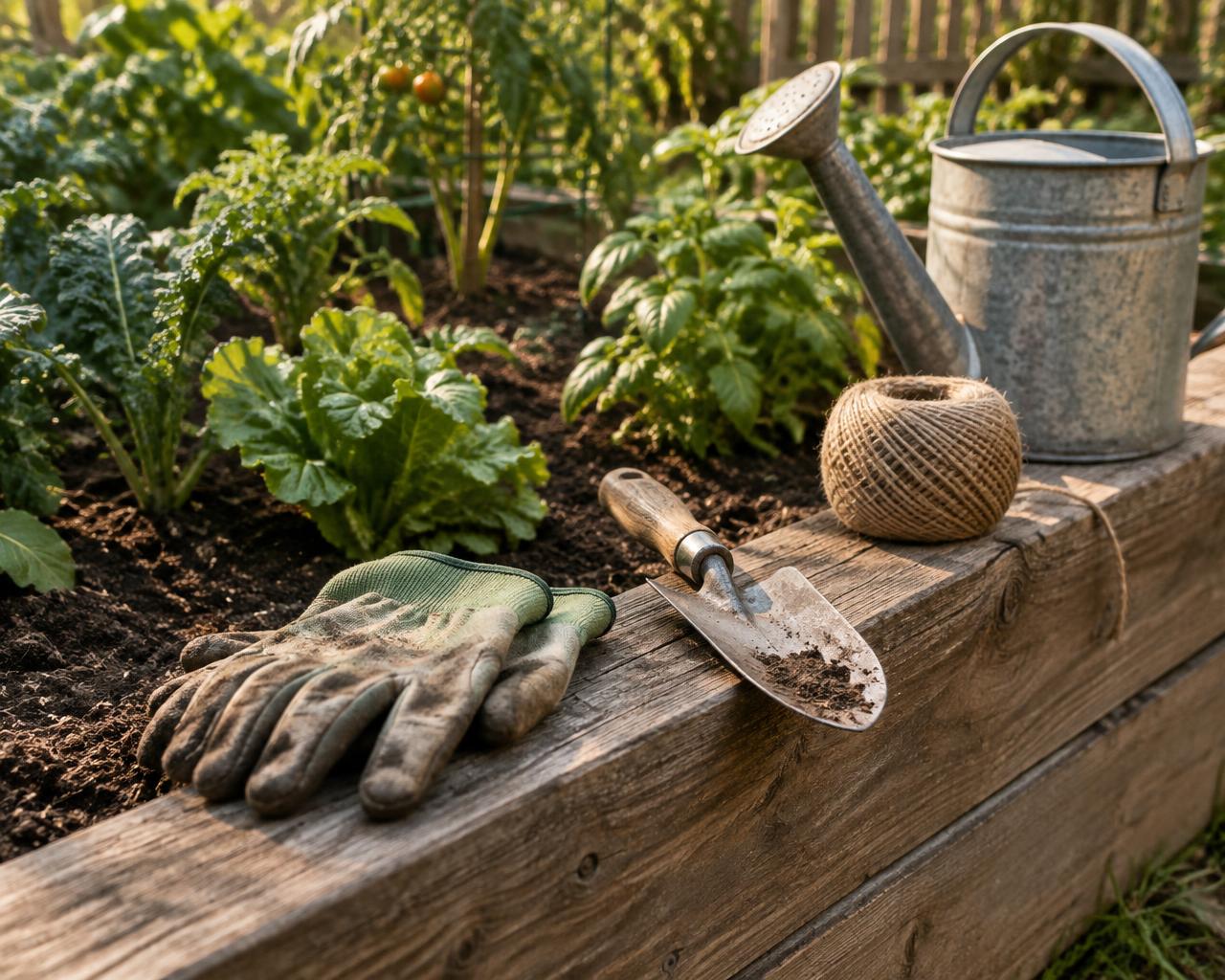
Breathable gloves with a coated palm give grip and protect hands from splinters and rough soil.
A gentle shower-setting wand waters at the soil line without knocking over seedlings.
Sturdy panels or arches let peas, pole beans and cucumbers grow up instead of out — saving bed space.
A trowel and hand fork with comfortable grips cover most raised-bed planting and weeding.
A compact bin or tumbler turns kitchen scraps and leaves into free soil top-ups each season.
Cell trays with a humidity dome make it easy to start tomatoes and peppers indoors early.
A padded kneeler or flip-over seat saves knees and back during planting and harvest days.
Sharp bypass pruners make clean cuts for harvesting peppers, trimming herbs and tidying tomatoes.